Tuesday, July 24, 2012
Flatiron Steak
The flatiron steak is a somewhat newfangled cut, once ground into burger, that I've gotten quite fond of. It's got the beefy flavor of a flank steak, as it's cut from the flavorful chuck, but it's more affordable on a per-pound and generally smaller and thinner.
It's also easier to grill. Typically they're about a pound or so, so they're easy to work with. Ideally, it should be uniform in thickness, but I've run into some that taper a bit towards one end - it probably depends on the butcher. And they run about $6.99-7.99 a pound.
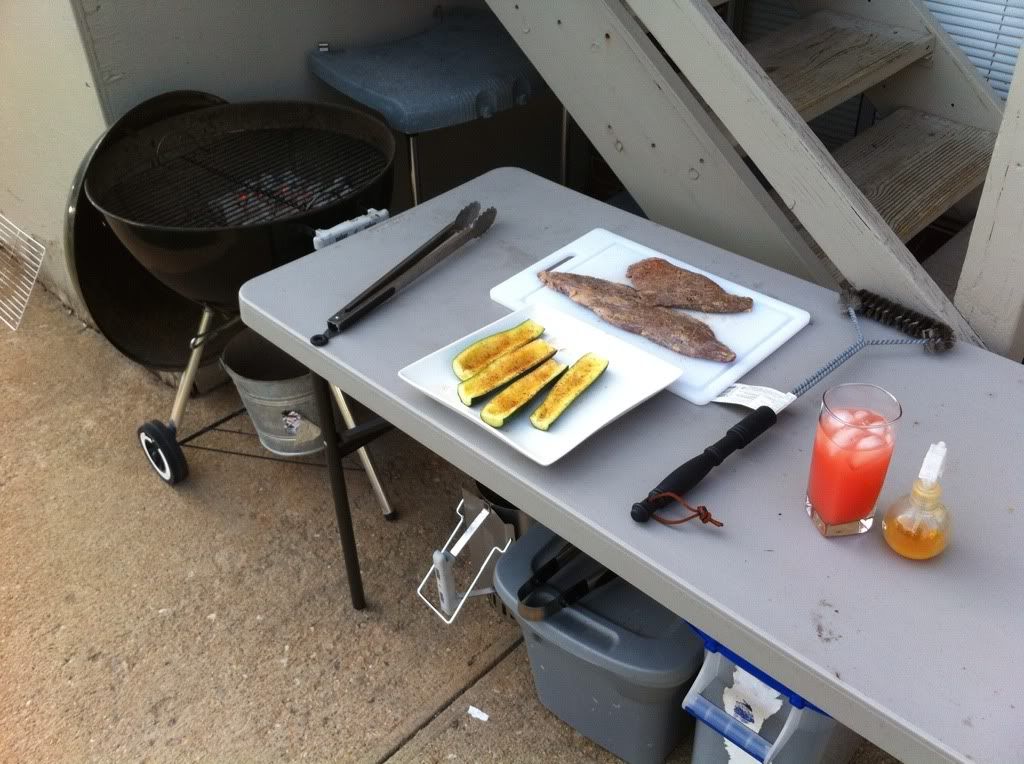
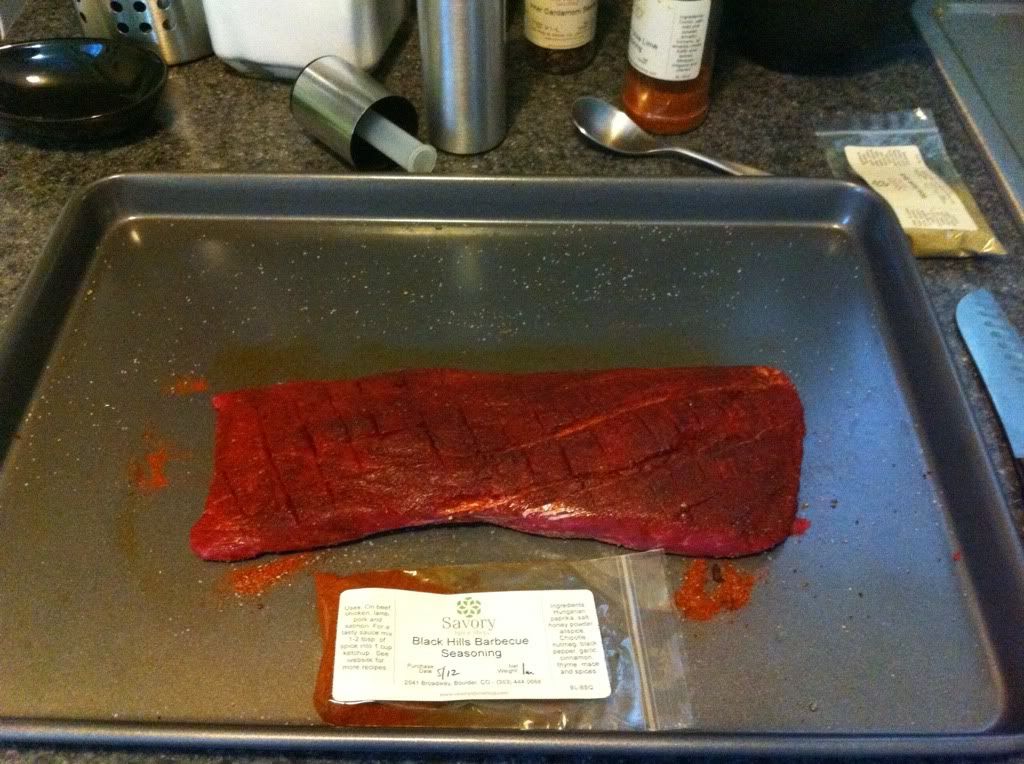
Typically, I marinate these guys for a few hours, but last night I decided to experiment, and rubbed one down with a simple rub of salt, garlic powder, red chile powder from New Mexico, pepper, and just a bit of sugar. I'm not sure I'd recommend the results over a good marinade, as the flavor wasn't as deep or as interesting - but hey, that's what grilling without remorse is all about. Check out my entry on marinades for my marinating strategy. I also sprayed it with a bit of olive oil to promote browning, which I think is a great idea regardless of what you're grilling. Also, I always use a sharp knife to crosshatch the smooth surface of the meat a bit, as a rougher surface produces more flavorful browned, crispy bits.
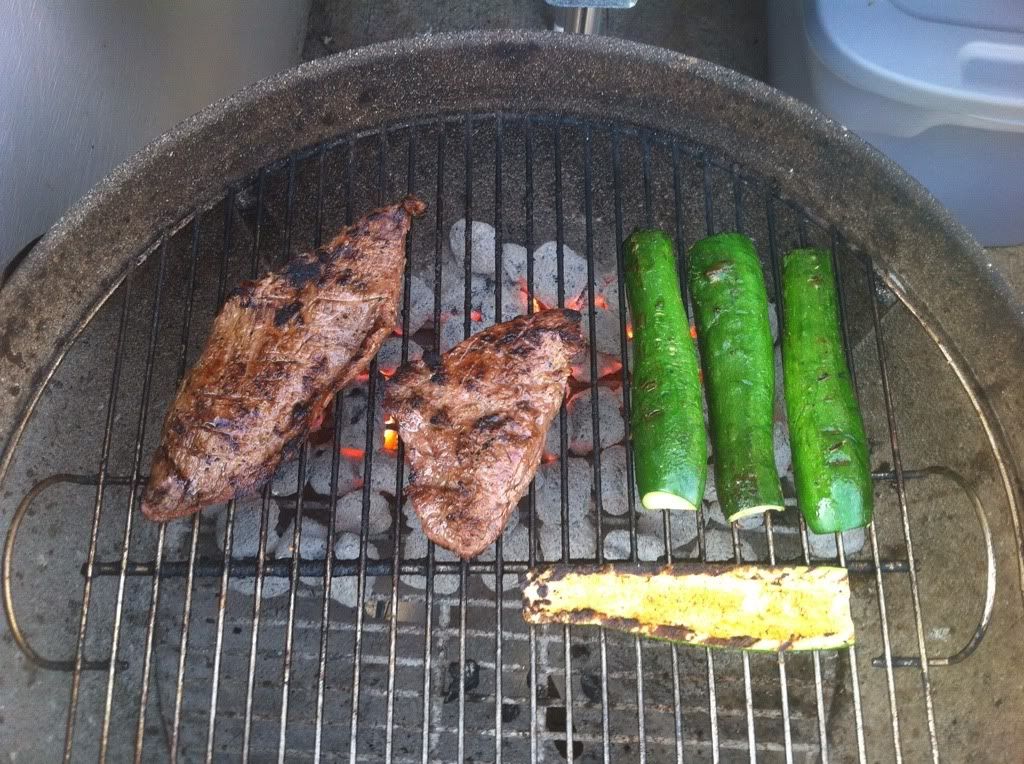
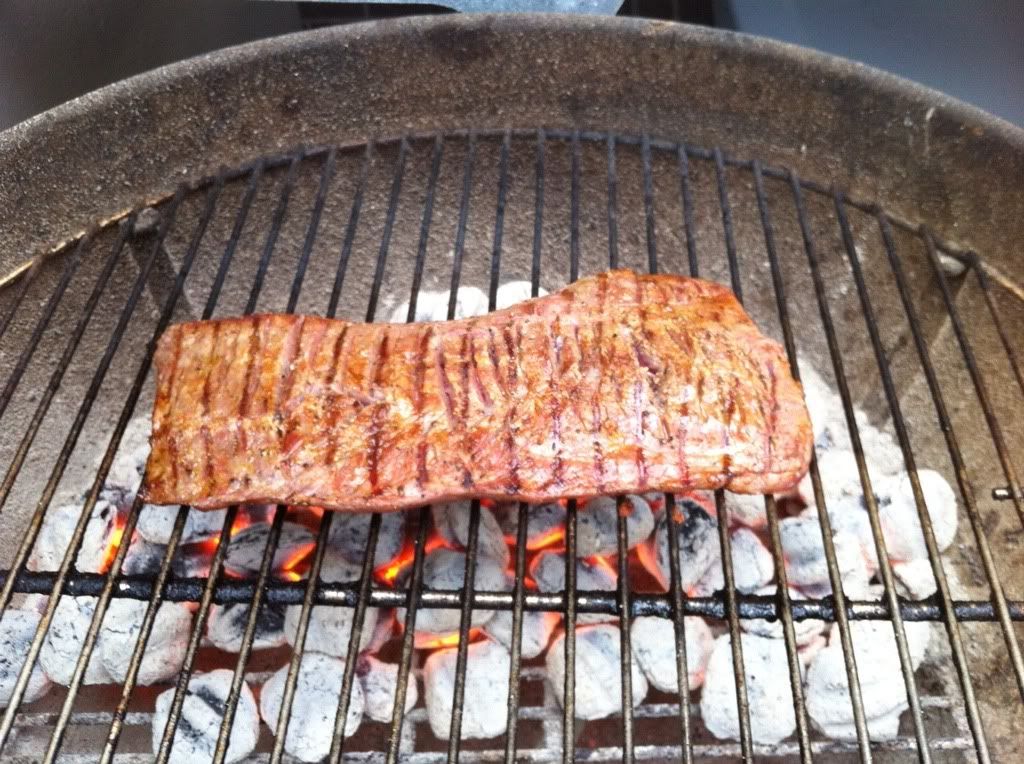
Once I had a nice hot two-level fire set up - with all the coals on one half of the grill, the other half clear so you can move the steak off the heat if necessary - I tossed it on. As I said in my first entry, I tend to be a flipper, not a waiter. A lot of folks will insist that a steak should only be flipped once, but I think that results in an overcooked surface by time the center is done. It also risks burning the rub. So I generally flip once every 60-75 seconds. That's enough time to get good grill marks and searing going, but not enough time for even high heat to burn your steak. Here we are after the first flip:
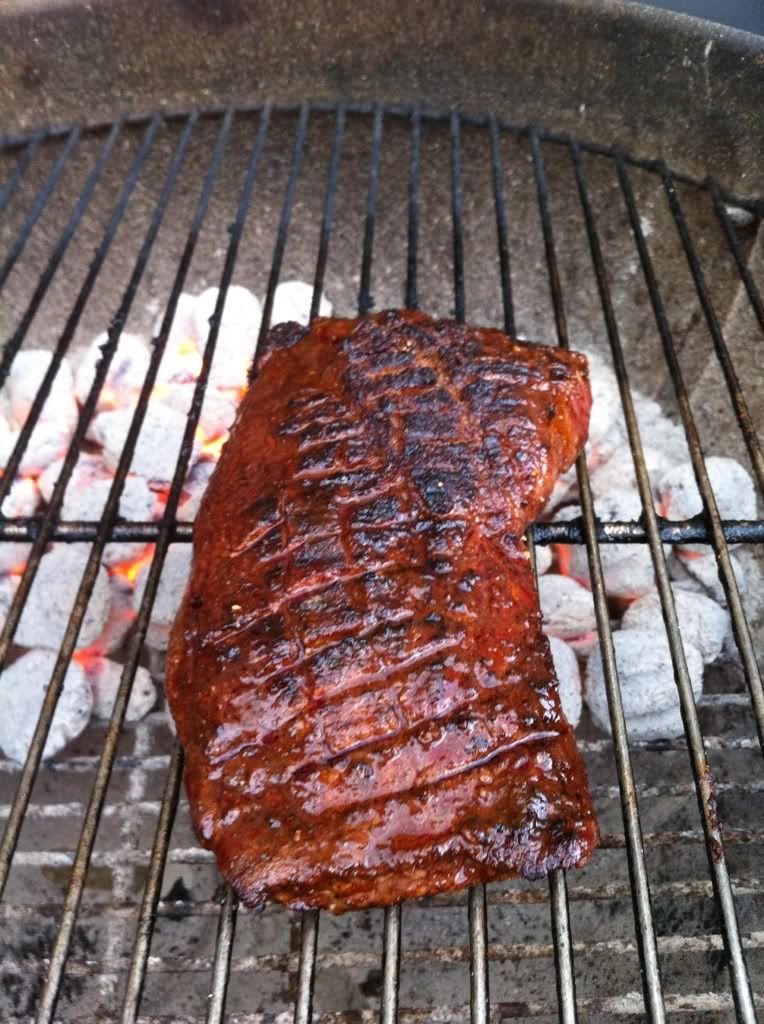
Immediately after the a flip, I always apply a thin spray of olive oil (or slop on a baste made with the marinade paste and some beer, wine, or juice) to the hot side I've just exposed. Basting cools down the very hot meat a bit, adds flavor, and cooks down as you grill, concentrating lots of flavor into a crusty bark on the surface. After 7-8 flips, you should be approaching medium-rare and the surface will be crispy and deeply browned. See how the crosshatched areas got all browned and yummy?
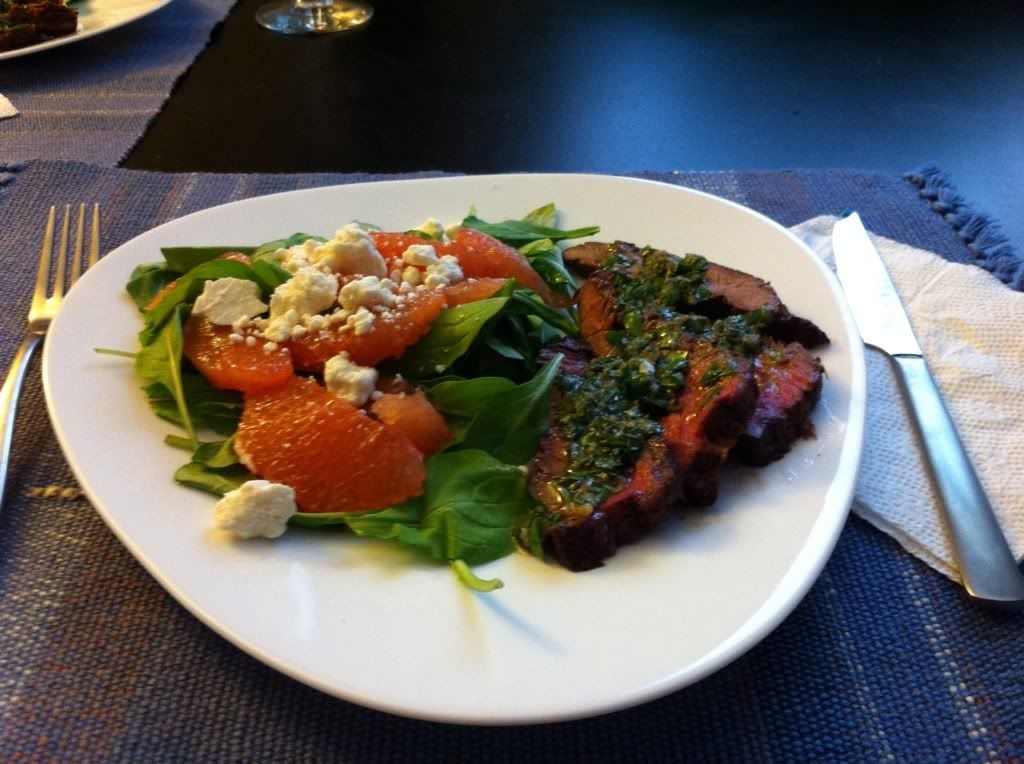
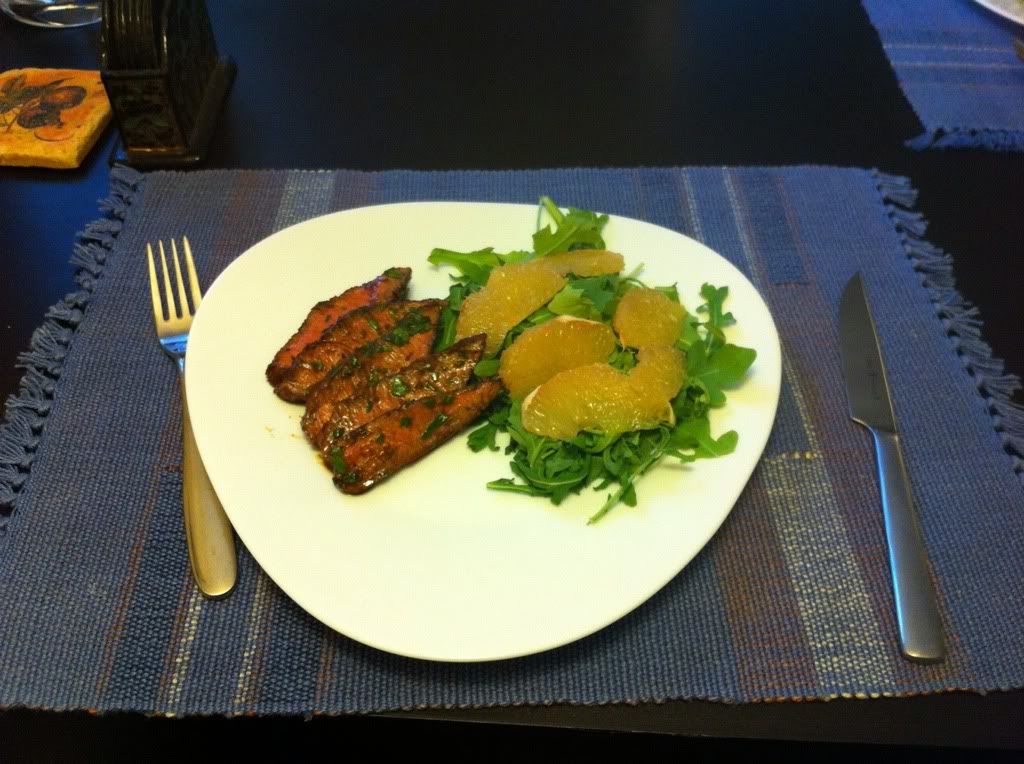
Like a flank steak, flatirons aren't that great as a big hunk of meat - thin slicing on the bias makes each bite more tender. Wait about 5-10 minutes to slice for the meat to rest and the juices to redistribute throughout the meat, slice thinly, and serve. Last night, we just had a simple arugula salad with grapefruit and some chimichurri sauce to finish.
Monday, July 23, 2012
Hello, World
Isn't that what you're supposed to put on a new website? Hello, world? In
any case, it's sincere. Hi, Earth. Pull a chair up. Stick your toes
in the grass. Want a beer? It's a sultry-hot Friday the Thirteenth in
Denver, Colorado, the July sun dipping towards the crest of the Mt.
Evans massif. In my sheltered backyard, it's cooling just a bit, but
by the grill, it's still hot as Hell - just the way I like it. I've got
my version of a Paloma on my work table: grapefruit juice mixed with
clean, dry Brazilian cachaça rather than the traditional tequila.
That's just enough to take the edge off the heat radiating off the heap
of charcoal under the grate.
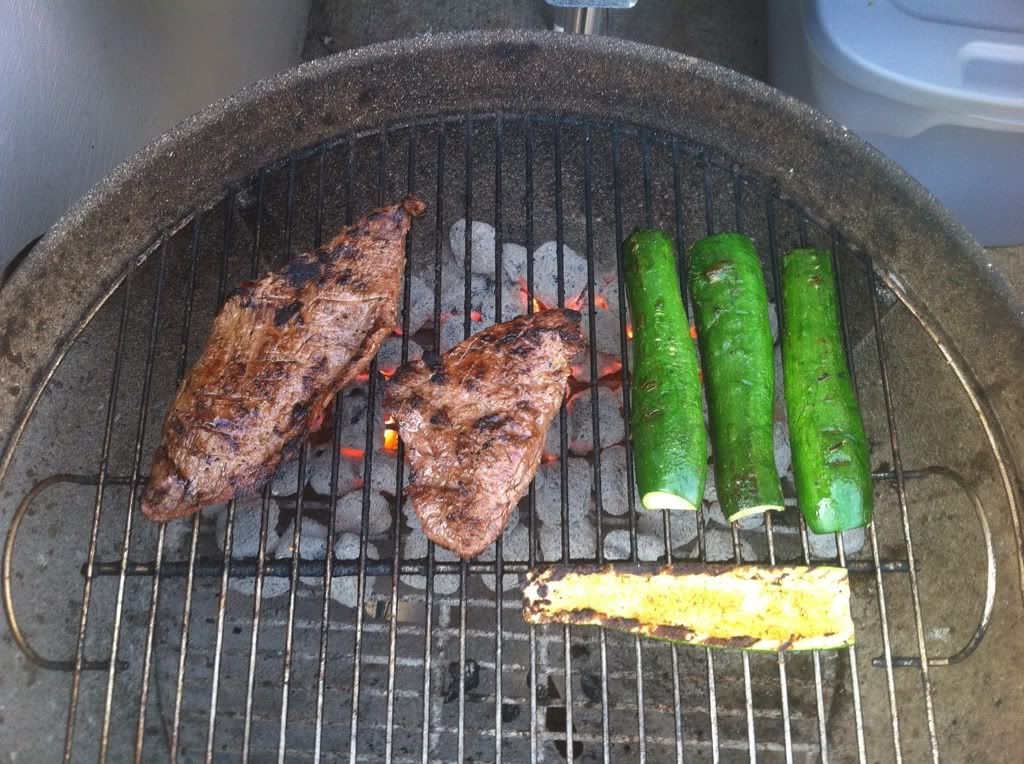
The grate's hot as hell by now, so it's time to throw on the steak. It's a mysterious cut from my favorite meat market called the Pedro Steak. It's got the texture of a flank steak, but it's L-shaped, and as thin as a skirt steak but not as chewy. I doused it in a puree of garlic, Sriracha sauce, bitter orange juice, and olive oil a few hours ago, then dressed it with a bit of salt and pepper while the charcoal was getting hot. It lets out a hiss like a steam valve as it hits the grill. I've also got some fresh zucchini, halved and oiled and sprinkled with pepper. Nothing fancy, just good.
I'm an active griller; I've got no patience for waiting nor for received wisdom. As such, I flip my steaks often, every minute or so, dousing them with a simple baste of oil and orange juice as I do. I find this, more so than the time-honored method of only flipping meat once, encourages the development of a deep, caramelized, browned crust on the surface while managing the migration of heat towards the core of the steak. The baste, too, keeps the surface of the meat from drying and toughening as the rest of the steak cooks.
I love this, you see. Cooking is one of the joys of my life, and cooking over a live fire is one of the purest and most immediate expressions of that craft. Done well, grilling is almost transcendent, both primal and refined. I've only been grilling a couple of years, but I suspect that I will continue learning something new every time I fire up the grill for decades to come. And that's what motivated me to start this blog, world - to pass on what I've learned about this old art, and to learn from you in turn. So thanks for checking it out, world. Looking forward to more.
Expect daily updates!
Cuban Palomilla Steaks:
Marinade
Puree all marinade ingredients in blender until smooth. Pour over steaks in flat pan or ziploc bag. Marinate at least 30 minutes up to two hours. Remove steaks from marinade and, using paper towels, pat steaks dry so no marinade remains. Salt and pepper generously. Arrange coals for high heat, or preheat gas grill to high. Allow grill grate to preheat, then grill, turning every minute or so for a total of 6-8 minutes until browned and nicely crusty. Baste the hot side of the meat after every flip. Allow the meat to rest 5 minutes before slicing thinly and serving. Optionally, makes badass steak sandwiches on a ciabatta or telera roll.
The grate's hot as hell by now, so it's time to throw on the steak. It's a mysterious cut from my favorite meat market called the Pedro Steak. It's got the texture of a flank steak, but it's L-shaped, and as thin as a skirt steak but not as chewy. I doused it in a puree of garlic, Sriracha sauce, bitter orange juice, and olive oil a few hours ago, then dressed it with a bit of salt and pepper while the charcoal was getting hot. It lets out a hiss like a steam valve as it hits the grill. I've also got some fresh zucchini, halved and oiled and sprinkled with pepper. Nothing fancy, just good.
I'm an active griller; I've got no patience for waiting nor for received wisdom. As such, I flip my steaks often, every minute or so, dousing them with a simple baste of oil and orange juice as I do. I find this, more so than the time-honored method of only flipping meat once, encourages the development of a deep, caramelized, browned crust on the surface while managing the migration of heat towards the core of the steak. The baste, too, keeps the surface of the meat from drying and toughening as the rest of the steak cooks.
I love this, you see. Cooking is one of the joys of my life, and cooking over a live fire is one of the purest and most immediate expressions of that craft. Done well, grilling is almost transcendent, both primal and refined. I've only been grilling a couple of years, but I suspect that I will continue learning something new every time I fire up the grill for decades to come. And that's what motivated me to start this blog, world - to pass on what I've learned about this old art, and to learn from you in turn. So thanks for checking it out, world. Looking forward to more.
Expect daily updates!
Cuban Palomilla Steaks:
- 1lb skirt steak, flatiron steak, or thin-sliced sirloin, no more than 1/2 inch thick
Marinade
- 1/4 cup olive oil
- 1/4 cup bitter orange or lime juice
- 1 shallot or 1/2 small red onion
- 8 cloves garlic
- 1 tsp sugar
- 1 tsp Sriracha chile sauce or crushed red pepper flakes
- 1/4 cup olive oil
- 3 tablespoons lime or bitter orange juice
Puree all marinade ingredients in blender until smooth. Pour over steaks in flat pan or ziploc bag. Marinate at least 30 minutes up to two hours. Remove steaks from marinade and, using paper towels, pat steaks dry so no marinade remains. Salt and pepper generously. Arrange coals for high heat, or preheat gas grill to high. Allow grill grate to preheat, then grill, turning every minute or so for a total of 6-8 minutes until browned and nicely crusty. Baste the hot side of the meat after every flip. Allow the meat to rest 5 minutes before slicing thinly and serving. Optionally, makes badass steak sandwiches on a ciabatta or telera roll.
Chimichurri Needs To Be In Your Life
On your steak, on your burger, on your fish, on a piece of crusty
French bread....doesn't really matter. But you need to make it, often,
and put it on everything. For real.
Oh, what, you need convincing?
Well, okay.
Chimichurri is Argentina's gift to the culinary world. Though its origins are not recorded with any rigor, it closely resembles the pestos of Italy, and the concept may have arrived in South America with Italian immigrants. Its use as a dressing for grilled meat originates with the gauchos and frontiersmen of the Pampas. Chimichurri is the classic condiment served at a traditional Argentinian asado - a day-long barbecue party of heroically gluttonous excess, where titanic primal cuts of beef are slowly spit-roasted next to a howling wood-fueled bonfire.
The ingredients are simple - parsley, oregano, garlic, red chile flakes, olive oil, and vinegar - with most takes on the theme incorporating fresh herbs. A simpler and less flavorful version, chimichurri seca, is prepared with dry herbs and spices.Of course, variations exist - I've seen recipes that include paprika and others that incorporate anchovies, tomatoes, and red pepper. But the simple, soulful original is the best.
And damn, is it good. On a smoky, peppery, freshly grilled steak, it's a revelation. The one-two punch of fresh herbal flavors and the bite of vinegar accent the flavor of good beef while cutting its richness and heaviness, making it light on the palate and in the belly. It turns up the music in much the same way that a squeeze of lime enlivens a carnitas taco, or a bit of vinegar brings together the flavors of a gazpacho. Its spark works the same magic on burgers, pulled pork, grilled chicken, and even hot dogs or a strong fish like mackerel or salmon. And it's diametrically opposed to the sludgy sweetness of a bottled steak sauce.
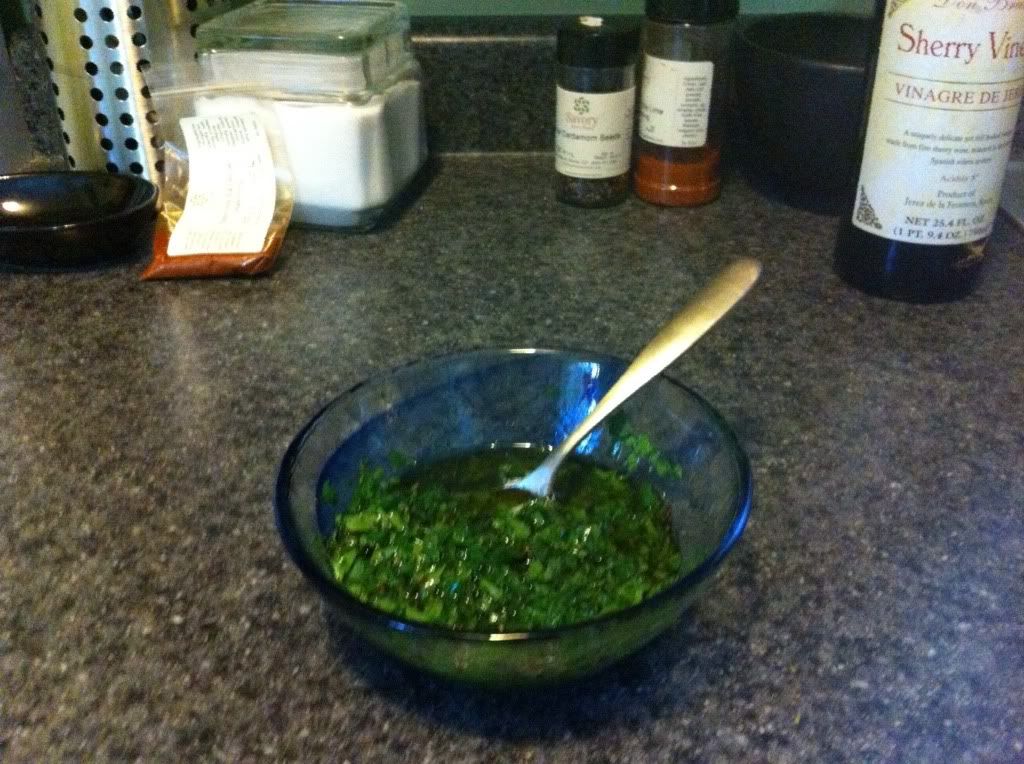
If you've got a lot to make, go ahead and use a food processor, but a good chef's knife is all you really need. A lot of recipes seem to advocate that you process chimichurri into a sauce, almost like a thin pesto or a viniagrette, but I think it works best with the ingredients merely minced, with the loose texture and distinct components characteristic of a relish or salsa. But it'd be good if it were processed to sauce, too. And one could amend it or modify it to their liking - replace the oregano with mint if you're serving over lamb, replace some or all of the parsley with cilantro, throw in some green onions, add a dose of mild, warmly flavored paprika....this is a starting point, nothing more.
First, mince the following finely:
In a bowl, mix the minced herbs with:
Stir it up good. Adjust vinegar content until it's nice and tangy. Add more chile flakes if you want. Add more garlic if you're not planning on making out with anybody. No, really, it's that simple, guys. Chop, grate, dump, stir. Then put it on meat. Put it on more meat. Enjoy life just that little bit more.
Oh, what, you need convincing?
Well, okay.
Chimichurri is Argentina's gift to the culinary world. Though its origins are not recorded with any rigor, it closely resembles the pestos of Italy, and the concept may have arrived in South America with Italian immigrants. Its use as a dressing for grilled meat originates with the gauchos and frontiersmen of the Pampas. Chimichurri is the classic condiment served at a traditional Argentinian asado - a day-long barbecue party of heroically gluttonous excess, where titanic primal cuts of beef are slowly spit-roasted next to a howling wood-fueled bonfire.
The ingredients are simple - parsley, oregano, garlic, red chile flakes, olive oil, and vinegar - with most takes on the theme incorporating fresh herbs. A simpler and less flavorful version, chimichurri seca, is prepared with dry herbs and spices.Of course, variations exist - I've seen recipes that include paprika and others that incorporate anchovies, tomatoes, and red pepper. But the simple, soulful original is the best.
And damn, is it good. On a smoky, peppery, freshly grilled steak, it's a revelation. The one-two punch of fresh herbal flavors and the bite of vinegar accent the flavor of good beef while cutting its richness and heaviness, making it light on the palate and in the belly. It turns up the music in much the same way that a squeeze of lime enlivens a carnitas taco, or a bit of vinegar brings together the flavors of a gazpacho. Its spark works the same magic on burgers, pulled pork, grilled chicken, and even hot dogs or a strong fish like mackerel or salmon. And it's diametrically opposed to the sludgy sweetness of a bottled steak sauce.
If you've got a lot to make, go ahead and use a food processor, but a good chef's knife is all you really need. A lot of recipes seem to advocate that you process chimichurri into a sauce, almost like a thin pesto or a viniagrette, but I think it works best with the ingredients merely minced, with the loose texture and distinct components characteristic of a relish or salsa. But it'd be good if it were processed to sauce, too. And one could amend it or modify it to their liking - replace the oregano with mint if you're serving over lamb, replace some or all of the parsley with cilantro, throw in some green onions, add a dose of mild, warmly flavored paprika....this is a starting point, nothing more.
First, mince the following finely:
- 1 1/2 packed cups flat-leaf Italian parsley
- 1/2 cup fresh oregano
In a bowl, mix the minced herbs with:
- 1 cup good, peppery olive oil
- 1/2 cup vinegar - I prefer the sweetness and nuttiness of sherry vinegar, but red wine vinegar will also do.
- 4 cloves garlic, grated with a microplane or similar fine zester/grater
- 1/2 teaspoon chile flakes, hot paprika, or chile powder - I've used everything from Turkish Aleppo chiles to standard crushed chile flakes and even Sriracha sauce in a pinch. The grassy flavor of a microplaned jalapeno chile would work well here too, I imagine. You're not looking for much spice here, just the zip that a little piquancy provides.
Stir it up good. Adjust vinegar content until it's nice and tangy. Add more chile flakes if you want. Add more garlic if you're not planning on making out with anybody. No, really, it's that simple, guys. Chop, grate, dump, stir. Then put it on meat. Put it on more meat. Enjoy life just that little bit more.
Marinating: Steak Edition
On a whim, as my little present to myself, I bought a Weber kettle grill a couple of years ago. My dad has always been a Weber man, and we were planning to grill hot dogs and burgers for two dozen, and so...why not? It was a hundred bucks.
I surprised myself by falling in love with the damn thing, and with what intense heat and smoky charcoal do to food. And so I started, as a scientist will, experimenting with techniques - direct and indirect cooking, coal distribution, rubs and marinades. Marinades, especially. At my friend Dan's spice emporium, Savory Spice Shop, I had access to not only every spice known to humankind, but also his merry crew of food geeks. So I set about figuring out the classic Grilling 101 final exam: turning out a flavorful, juicy marinated steak. Of course, you can make a perfectly good steak with nothing but salt and pepper, but I love the complexity and richness marinating adds to a steak.
My first marinated flank steak was an unmitigated disaster; the idea was fajitas, so I figured I'd go with a chile lime deal and winged it. I juiced four limes, added some red chile powder and cumin and coriander, marinated the steak for 24 hours, then grilled it. Lime juice, I reasoned, would tenderize the steak, and lime juice is also yummy. Yes?
No. One's griller instincts sometimes steer you wrong. The steak was wretched. The surface was mushy. The flavor of lime was overpowering and completely blew away anything else I put in the marinade. No beef flavor was to be found. It was just a mushy wad of burned muscle soaked in lime juice. Major fail, as the internet people say. In consultation with my coworkers, a few cookbooks, and the internet, I began formulating an alternate hypothesis. I learned a few things and immediately felt like a dumbass for winging it. A dozen or so steaks later, I hit on a pretty good marinade formula.
My basic marinade formula is a quarter cup each of oil and and minced aromatics, with 2-3 tablespoons of beer and an optional 2 tablespoons of soy or fish sauce. All of these should come together in a paste, not a liquid. Flavoring a piece of meat doesn't require a gallon of marinade - why not concentrate all the flavors right there on the surface? I grind this in my big, badass cast iron mortar and pestle - one could also use a small food processor or blender- and it comes out like baby food. (Protip: do not feed to babies.) Add the beer as necessary to loosen up the paste.
Apparently, marinades really only affect the first few millimeters of a steak - so yes, the lime juice tenderized the crap out of the surface of the meat, but it did nothing to the interior. So forget about tenderizing the meat; you've got to accomplish that other ways. No, now you're just trying to flavor it as deeply as possible.
To flavor it, you need oil. Oil transfers flavors exceptionally well, because many things that produce strong flavors are oils themselves or otherwise dissolve well in oil. So if you want your marinade to transfer the flavor of your chiles or garlic or pepper or rosemary or what have you, it should primarily incorporate oil, with other liquids playing a supporting role.
Beer is a fantastic partner for your oil as a liquid base. Its flavor is complimentary to many savory ingredients, not particularly sweet, just slightly acidic, and has a bit of body to it. I typically keep some cans of cheap beer like PBR around for this purpose, but whatever you're drinking is fine. You could also use wine as your liquid base. You could also use citrus or other fruit juice, tomato juice, and vinegar. However, remember my disaster and consider how long you're marinating your steak: the more acidic your marinade, the shorter your marinating time needs to be.
To flavor the oil that flavors the meat, you need lots and lots of aromatics. I couldn't even taste the cumin and chile in my first marinade, because I used about a teaspoon of each. No, use a ton. Garlic? 4-6 big cloves. Shallots? 1-2. I've used two tablespoons of chile powder in marinades before. Go big on the aromatics - again, you're just flavoring the surface, so flavor the surface! If they're whole ingredients, they should all be minced fine, to make the pureeing easier. I find that aromatics with big, deep flavors work best - delicate, subtle flavors tend to get lost on the grill, especially herbs but also many spices. A very functional marinade could be made with only garlic, chiles, oil, and soy sauce - more ephemeral flavors can be introduced with a sauce, relish, or rub you add just before or following cooking.
You also need salt. Brining ain't just for turkeys anymore. Salting a piece of meat first draws water out, initially toughening it, but it unwinds proteins and creates microscopic gaps and spaces in the meat. Eventually, osmotic pressure draws that salty meat juice, and other marinade ingredients, back into the meat. My salt component in the marinade is usually soy sauce, fish sauce, or salt added to the wine/beer/citrus juice and dissolved. Soy sauce and fish sauce have the bonus of containing a ton of glutamates, which boost umami flavor and richness, but they have a strong flavor, so only a few tablespoons of these are necessary.
After marinating, I stab the hell out of the meat with a sharp fork - more surface area for the marinade to penetrate, see? After that I salt the meat directly, with a little kosher salt, and spread the paste all over the both sides with a spatula. The flavors are so intense that the marinating time isn't very long - a couple hours will do it, though unlike with an overly acidic marinade, all day won't necessarily hurt.
When it comes time to grill, scrape the paste off - it's already done its duty, and it just turns to crusty charred bits on the grill. A rub could be introduced at this time, if you want to incorporate more delicate flavors. Cumin, coriander, cinnamon, and paprika, especially, benefit from a little direct heat, so consider deploying a followup rub.
I find that the results are truly, deeply flavorful - you can taste spices and herbs clearly even after grilling, and the salt punches up the flavor of the meat very well. It doesn't damage the meat or overpower it like large amounts of acid or salad dressing can, and it's amenable to any cuisine's favorite flavors. And it's pretty darn quick and easy, too - you can get good flavor in only an hour of marinating.
On a whim, as my little present to myself, I bought a Weber kettle grill a couple of years ago. My dad has always been a Weber man, and we were planning to grill hot dogs and burgers for two dozen, and so...why not? It was a hundred bucks.
I surprised myself by falling in love with the damn thing, and with what intense heat and smoky charcoal do to food. And so I started, as a scientist will, experimenting with techniques - direct and indirect cooking, coal distribution, rubs and marinades. Marinades, especially. At my friend Dan's spice emporium, Savory Spice Shop, I had access to not only every spice known to humankind, but also his merry crew of food geeks. So I set about figuring out the classic Grilling 101 final exam: turning out a flavorful, juicy marinated steak. Of course, you can make a perfectly good steak with nothing but salt and pepper, but I love the complexity and richness marinating adds to a steak.
My first marinated flank steak was an unmitigated disaster; the idea was fajitas, so I figured I'd go with a chile lime deal and winged it. I juiced four limes, added some red chile powder and cumin and coriander, marinated the steak for 24 hours, then grilled it. Lime juice, I reasoned, would tenderize the steak, and lime juice is also yummy. Yes?
No. One's griller instincts sometimes steer you wrong. The steak was wretched. The surface was mushy. The flavor of lime was overpowering and completely blew away anything else I put in the marinade. No beef flavor was to be found. It was just a mushy wad of burned muscle soaked in lime juice. Major fail, as the internet people say. In consultation with my coworkers, a few cookbooks, and the internet, I began formulating an alternate hypothesis. I learned a few things and immediately felt like a dumbass for winging it. A dozen or so steaks later, I hit on a pretty good marinade formula.
My basic marinade formula is a quarter cup each of oil and and minced aromatics, with 2-3 tablespoons of beer and an optional 2 tablespoons of soy or fish sauce. All of these should come together in a paste, not a liquid. Flavoring a piece of meat doesn't require a gallon of marinade - why not concentrate all the flavors right there on the surface? I grind this in my big, badass cast iron mortar and pestle - one could also use a small food processor or blender- and it comes out like baby food. (Protip: do not feed to babies.) Add the beer as necessary to loosen up the paste.
Apparently, marinades really only affect the first few millimeters of a steak - so yes, the lime juice tenderized the crap out of the surface of the meat, but it did nothing to the interior. So forget about tenderizing the meat; you've got to accomplish that other ways. No, now you're just trying to flavor it as deeply as possible.
To flavor it, you need oil. Oil transfers flavors exceptionally well, because many things that produce strong flavors are oils themselves or otherwise dissolve well in oil. So if you want your marinade to transfer the flavor of your chiles or garlic or pepper or rosemary or what have you, it should primarily incorporate oil, with other liquids playing a supporting role.
Beer is a fantastic partner for your oil as a liquid base. Its flavor is complimentary to many savory ingredients, not particularly sweet, just slightly acidic, and has a bit of body to it. I typically keep some cans of cheap beer like PBR around for this purpose, but whatever you're drinking is fine. You could also use wine as your liquid base. You could also use citrus or other fruit juice, tomato juice, and vinegar. However, remember my disaster and consider how long you're marinating your steak: the more acidic your marinade, the shorter your marinating time needs to be.
To flavor the oil that flavors the meat, you need lots and lots of aromatics. I couldn't even taste the cumin and chile in my first marinade, because I used about a teaspoon of each. No, use a ton. Garlic? 4-6 big cloves. Shallots? 1-2. I've used two tablespoons of chile powder in marinades before. Go big on the aromatics - again, you're just flavoring the surface, so flavor the surface! If they're whole ingredients, they should all be minced fine, to make the pureeing easier. I find that aromatics with big, deep flavors work best - delicate, subtle flavors tend to get lost on the grill, especially herbs but also many spices. A very functional marinade could be made with only garlic, chiles, oil, and soy sauce - more ephemeral flavors can be introduced with a sauce, relish, or rub you add just before or following cooking.
You also need salt. Brining ain't just for turkeys anymore. Salting a piece of meat first draws water out, initially toughening it, but it unwinds proteins and creates microscopic gaps and spaces in the meat. Eventually, osmotic pressure draws that salty meat juice, and other marinade ingredients, back into the meat. My salt component in the marinade is usually soy sauce, fish sauce, or salt added to the wine/beer/citrus juice and dissolved. Soy sauce and fish sauce have the bonus of containing a ton of glutamates, which boost umami flavor and richness, but they have a strong flavor, so only a few tablespoons of these are necessary.
After marinating, I stab the hell out of the meat with a sharp fork - more surface area for the marinade to penetrate, see? After that I salt the meat directly, with a little kosher salt, and spread the paste all over the both sides with a spatula. The flavors are so intense that the marinating time isn't very long - a couple hours will do it, though unlike with an overly acidic marinade, all day won't necessarily hurt.
When it comes time to grill, scrape the paste off - it's already done its duty, and it just turns to crusty charred bits on the grill. A rub could be introduced at this time, if you want to incorporate more delicate flavors. Cumin, coriander, cinnamon, and paprika, especially, benefit from a little direct heat, so consider deploying a followup rub.
I find that the results are truly, deeply flavorful - you can taste spices and herbs clearly even after grilling, and the salt punches up the flavor of the meat very well. It doesn't damage the meat or overpower it like large amounts of acid or salad dressing can, and it's amenable to any cuisine's favorite flavors. And it's pretty darn quick and easy, too - you can get good flavor in only an hour of marinating.
Subscribe to:
Posts (Atom)